
Minimally Invasive Knee Replacement, Explained in Plain Words
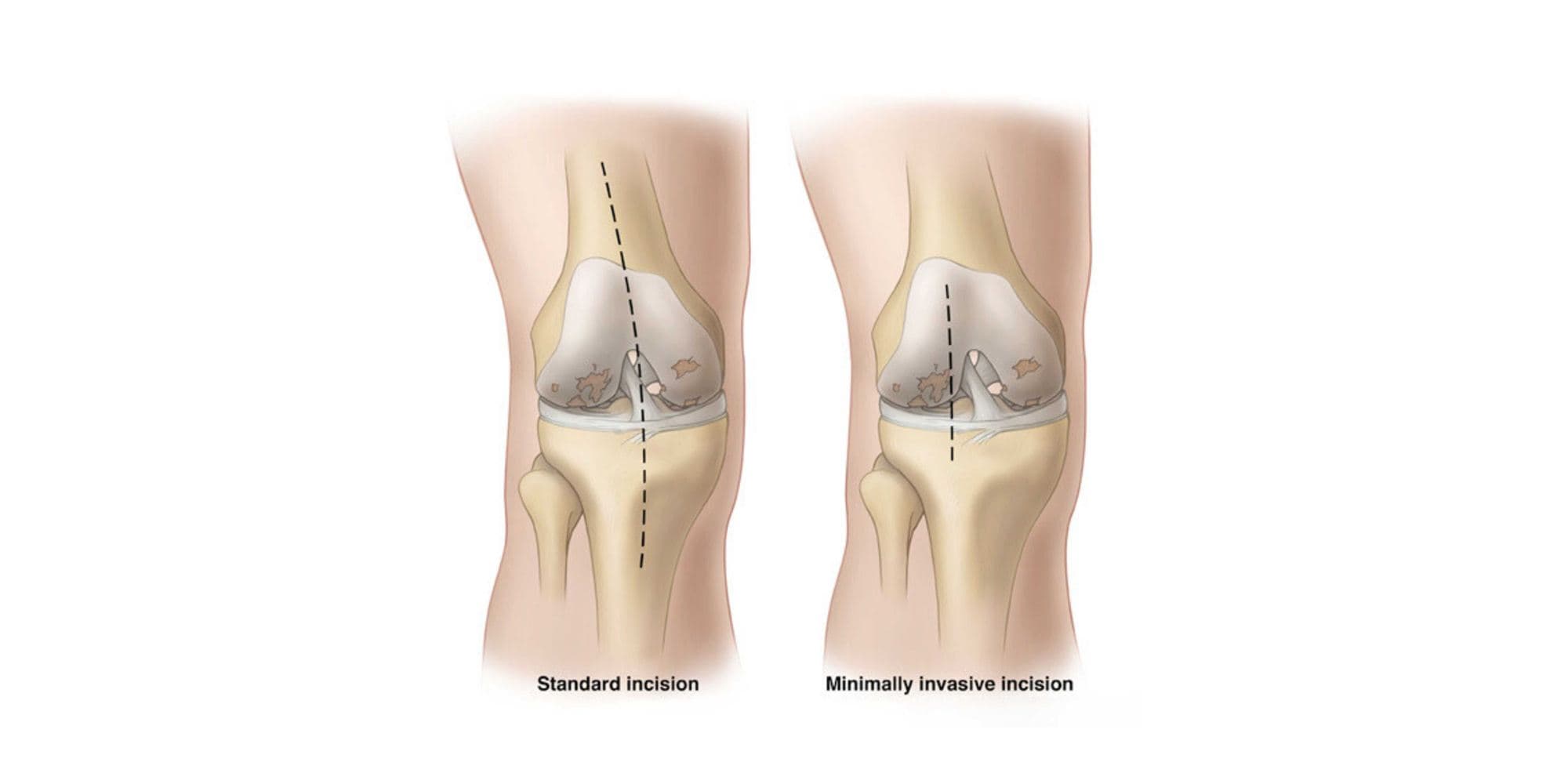
A knee replacement resurfaces the worn parts of the knee joint with metal and plastic components. In a minimally invasive knee replacement, the surgeon does that work through a shorter incision and with less disruption to the muscles and tendons around the knee.
A Shorter Incision
Minimally invasive knee replacement is typically performed through an incision of about 4 to 6 inches, compared with the 8 to 10 inches used in traditional knee replacement.
Sparing the Muscles That Move Your Knee
The quadriceps is the large muscle group on the front of your thigh that straightens your knee. Tissue-sparing approaches, often called quadriceps-sparing, midvastus or subvastus, are designed to reach the joint while avoiding or minimizing trauma to those muscles and tendons.
What That Can Mean for You
Less pain and swelling after surgery.
A smaller, less noticeable scar.
Earlier walking: Dr. Marshall-Rodriguez's patients walk with assistance the day of surgery and, on average, walk unassisted within 4 to 6 days.
A faster return to everyday activities.
What It Doesn't Change
Current evidence suggests the long-term results of minimally invasive knee replacement are similar to those of traditional knee replacement. Like any surgery, it carries risks, including infection, wound-healing problems, blood clots, nerve or artery injury and implant positioning errors.
That is why experience matters. Minimally invasive knee replacement should be performed by a well-trained, highly experienced orthopaedic surgeon. Dr. Marshall-Rodriguez has performed more than 7,500 knee replacements and trained in joint reconstruction at Rush University in Chicago, a world leader in minimally invasive joint replacement.
Find Out If You Are a Candidate
Not every patient is a candidate for a minimally invasive approach. Dr. Marshall-Rodriguez will evaluate your knee and your overall health and explain the options. Call 210-878-4116 to schedule a consultation in San Antonio or Colorado.